


Investment case: Altcoins
 11 min read
The materials on this website or any third-party websites accessed herein are not associated with and have not been reviewed or approved by: (i) Valkyrie Funds LLC dba CoinShares, its products, or the distributor of its products, or (ii) CoinShares Co., its products, or the marketing agent of its products.
While Bitcoin remains the flagship digital asset, it represents only one slice of the cryptocurrency landscape. Thousands of other cryptocurrencies, collectively called altcoins ("alternative coins"), have emerged to address different challenges, unlock new capabilities, and power the next generation of blockchain applications.
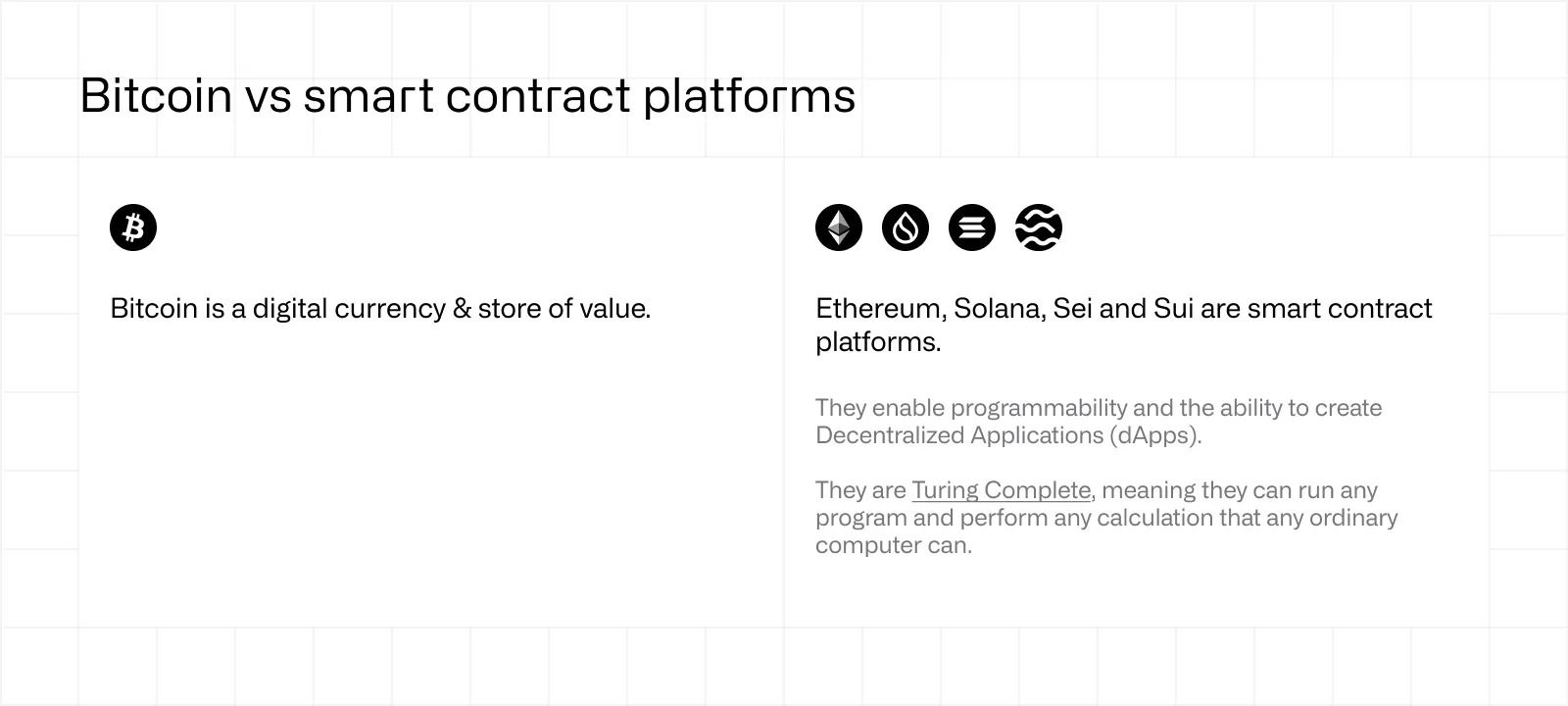
The altcoin investment thesis is fundamentally different from Bitcoin's. Whereas Bitcoin is increasingly viewed as a digital store of value, altcoins are innovation-driven ventures. Many will disappear, much like early internet startups, but a select few (such as Ethereum, Solana, Sui, Sei, and others) are building real-world use cases and attracting genuine on-chain economic activity from enterprises and developers. These networks are not just speculative tokens; they are functioning platforms where companies conduct real business.
What "altcoin investment" means
Altcoin investment refers to allocating capital to cryptocurrencies other than Bitcoin, with the aim of capturing upside from blockchain-based innovation. Unlike investing in Bitcoin as a store of value or inflation hedge, investing in altcoins is closer in spirit to early-stage venture capital: you are backing networks that may become the infrastructure of a new financial system, knowing that most will not survive and a handful may define the next era of digital finance.
This distinction matters for how investors size positions, assess risk, and define exit criteria. Altcoins should not be evaluated by the same metrics as Bitcoin. Instead, the relevant questions are: does this network generate real economic activity? Is there a growing developer community building on top of it? And is the underlying token design sustainable over time?
Understanding altcoins
Altcoins cover a vast spectrum of blockchain networks and tokens, from payments-focused projects like Litecoin to smart contract platforms such as Ethereum. Ethereum's 2015 launch was a turning point: it introduced programmable blockchain infrastructure, enabling decentralised applications (dApps) that run without central control. Today, Ethereum remains the largest smart contract platform, with a circulating market cap of $241,8B and $280,5B in total value locked across its ecosystem as of 31 May 2026.1
Solana, launched in 2020, is a high-speed Layer 1 blockchain designed for scale, capable of processing thousands of transactions per second at low cost. Despite setbacks linked to the FTX collapse, Solana has rebuilt momentum, with a circulating market cap of $47,531,411,808 as of 31 May 2026, and growing adoption by payment processors, NFT marketplaces, and DeFi platforms.2
Sui and Sei represent a newer wave of infrastructure chains, optimised for throughput, parallel execution, and institutional-grade finance. These platforms are already piloting real-world use cases in supply chain management, tokenised securities, and on-chain settlement for trading firms.
Growth potential and selectivity
Altcoins can deliver higher upside than Bitcoin because they are tied to innovation-led growth sectors: decentralised infrastructure, tokenised assets, and next-generation internet applications. However, they also carry higher risk. Many projects have unproven business models or fragile governance. Regulatory scrutiny and security vulnerabilities can derail adoption. Market data shows that 53.2% of the nearly 20.2 million tokens that entered the market between mid-2021 and end of 2025 are no longer actively traded, with 11.6 million of those failures occurring in 2025 alone.3
This high attrition rate is not a reason to ignore altcoins but a reason to be selective. Like early-stage venture investing, the winners can become foundational technologies for decades to come.
Market structure and cycles: liquidity, Bitcoin dominance, and altcoin rotations
Altcoin performance is closely tied to broader crypto market structure. One of the most reliable leading indicators is Bitcoin dominance: the share of total crypto market capitalisation represented by Bitcoin. When Bitcoin dominance rises, capital tends to concentrate in Bitcoin, often at the expense of altcoins. When Bitcoin dominance falls, liquidity rotates into altcoin markets, historically producing what participants call "altcoin season."
This rotation dynamic reflects the risk appetite of crypto markets. Bitcoin typically leads bull cycles, acting as the on-ramp for new capital entering the asset class. As confidence builds, investors move down the risk curve into Ethereum, then into smaller-cap infrastructure tokens, and finally into speculative assets. Understanding where a cycle stands, and which part of the risk curve is attracting capital, is a core input into any disciplined altcoin allocation framework.
Macro conditions also shape the cycle. Rising liquidity environments, looser monetary policy, and improving risk appetite globally have historically correlated with altcoin outperformance. Conversely, tightening cycles tend to hit altcoins harder than Bitcoin, compressing multiples and eliminating weaker projects.
Smart contracts as investable infrastructure
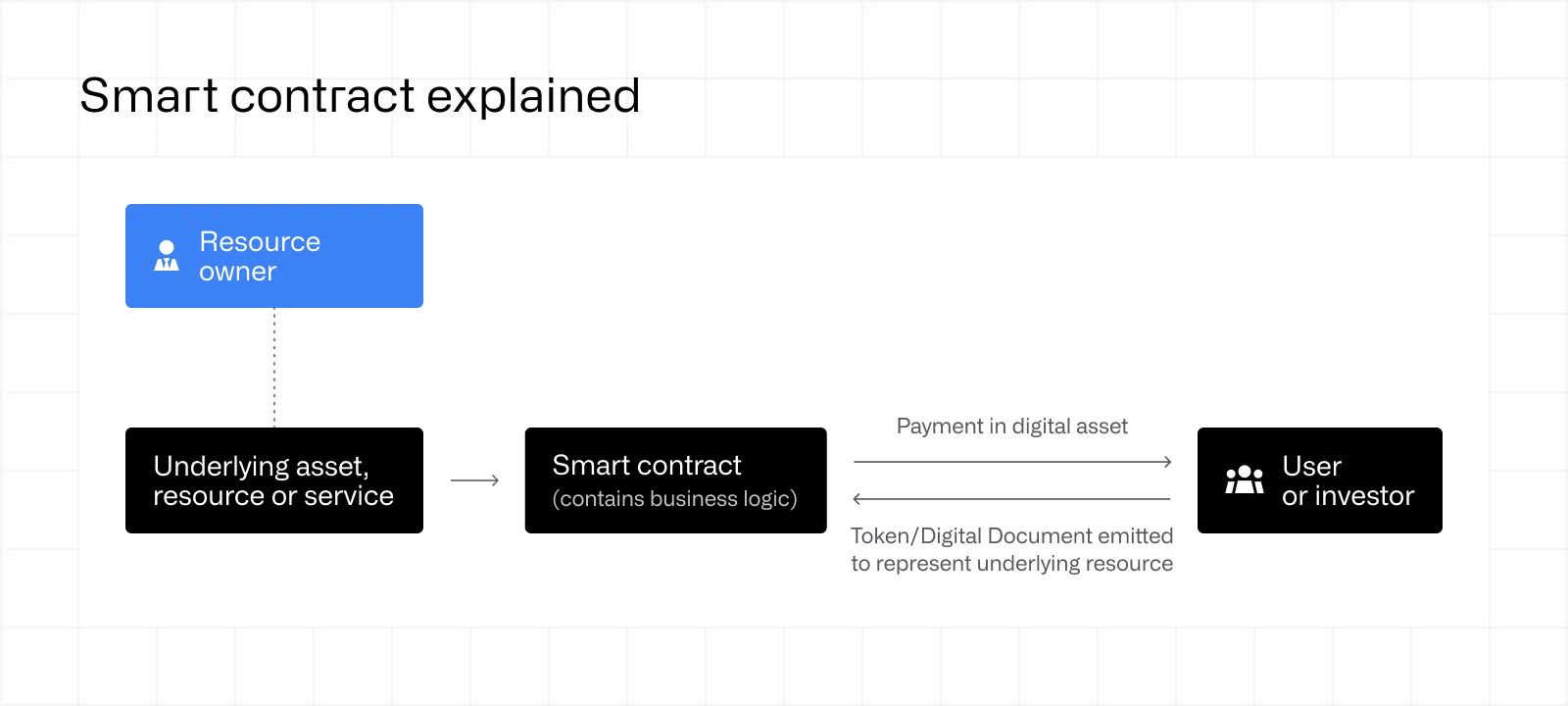
Altcoins like Ethereum, Solana, Sei and Sui enable functionality that goes far beyond digital money. Their key innovation is the smart contract: a piece of self-executing code stored on the blockchain that runs when predefined conditions are met. Code running without middlemen.
Smart contracts eliminate the need for intermediaries in a wide range of transactions. Once deployed, the code is usually immutable, meaning it cannot be altered, and fully transparent, allowing any user to verify the logic and conditions. This makes smart contracts especially useful in finance, real estate, supply chain management, digital identity, and intellectual property.
Originally proposed in 1994 by cryptographer, and later early-Bitcoin developer, Nick Szabo, smart contracts are now powering a new era of trustless, automated systems: a core building block of what many call the "future of finance." For investors, this is not merely a technical point. The networks that host smart contracts capture economic value through transaction fees and staking rewards, making them productive assets rather than purely speculative ones.
DApps and on-chain activity: adoption signals investors can measure
Smart contracts are the foundation for decentralised applications (dApps): apps that run on blockchain networks without central control. These applications replicate, and in many cases improve upon, services offered by traditional financial institutions, while also extending to sectors like gaming, identity, and media.
 The most developed use case is Decentralised Finance (DeFi). As of late April 2026, approximately $86 billion in assets are locked in DeFi protocols, according to DeFiLlama, down from a high of over $99 billion earlier in the year following a major protocol exploit.2 One of the leading dApps, Uniswap, facilitates token trading and rewards users for providing liquidity, without the need for a central exchange. Platforms like Uniswap have become liquidity hubs rivalling mid-sized traditional exchanges.
Beyond finance, GameFi applications let players earn tokens with real-world value, while decentralised social media and on-chain identity solutions are emerging to challenge Web2 incumbents. Many of these sectors rely on high-performance altcoins like Solana or Sei, which can handle transaction volumes comparable to centralized platforms. The growth of these use cases is measurable: on-chain transaction counts, active wallets, and protocol revenue all provide investors with hard data on real adoption.
A due diligence checklist for altcoin investment
Before investing, apply the same discipline you would to early-stage technology opportunities. The key questions: Is there demonstrable adoption by businesses or consumers? Are developers and companies building on the platform? Is the token supply sustainable and aligned with long-term value creation? And is decision-making governance open and accountable? A positive answer across all four does not guarantee returns, but it sharply reduces the probability of total loss.
The role of altcoins in a diversified portfolio
Select altcoins, particularly those with strong developer ecosystems, growing real-world use cases, and enterprise adoption, can provide exposure to the "picks and shovels" of the blockchain economy. While Bitcoin may remain the bedrock of a digital asset portfolio, altcoins can serve as the innovation growth sleeve, enhancing return potential if sized and managed appropriately.
It is also important to remember that, unlike Web2, altcoin protocols allow anyone to actively participate in network activity and be rewarded for doing so, whether by validating transactions, providing liquidity, or voting on governance proposals. On some networks, simply holding the token can be somewhat akin to owning a slice of a submarine internet fibre cable, a model that stands in stark contrast to the FAANG-era internet, where value tends to be concentrated in a few hands.
For practical portfolio construction guidance, including allocation sizing, rebalancing approaches, and the performance data behind different allocation models, see our guide on portfolio diversification with crypto.
In other words: Bitcoin may be digital gold, but the right altcoins are the digital railroads, app stores, and infrastructure companies of the next financial era.
Risk management
Altcoin allocations require explicit risk controls. Given their higher volatility and liquidity risk relative to Bitcoin, position sizing should be conservative and pre-defined. A disciplined approach involves setting a maximum allocation to the altcoin sleeve as a share of total digital asset exposure, establishing rebalancing triggers when that weight drifts materially, and defining scenario-based exit criteria rather than reacting to price moves in real time.
Concentration risk deserves particular attention. Owning five altcoins that are all Layer 1 infrastructure chains is not diversification; it is a single directional bet on one narrative. True diversification within altcoins requires exposure across different use cases, market caps, and chain architectures. Investors should also factor in custody risk, exchange counterparty risk, and the specific liquidity profiles of the assets they hold, particularly in smaller-cap positions where bid-ask spreads widen significantly during stress periods.
Finally, the time horizon matters. Altcoins have historically required multi-year holding periods to realise their upside, and short-term holders have frequently been flushed out during drawdowns that exceeded 70 to 90% from peak. Entering with a clear time horizon and position size that makes such drawdowns survivable is a prerequisite for disciplined participation.
Conclusion
Altcoins represent the innovation layer of the digital asset ecosystem. For investors willing to apply rigorous selection criteria, manage size carefully, and hold through volatility, they offer differentiated exposure to the infrastructure of a new financial era. The key is not to treat altcoin investment as speculation, but as a disciplined allocation to the networks most likely to generate durable economic value. Understanding market cycles, evaluating on-chain fundamentals, and maintaining risk controls are what separate investors from speculators in this market.
FAQ
How to invest in altcoins
The most straightforward routes are purchasing directly through a regulated cryptocurrency exchange or gaining exposure via exchange-traded funds (ETFs) where available. Direct purchase gives exposure to the token itself, including any staking rewards, but requires custody management. ETFs simplify access and custody but may not capture all the economics of token ownership. For most investors approaching altcoins for the first time, starting with the largest and most liquid names (Ethereum, Solana) and using regulated, audited venues reduces both execution risk and custody risk.
What are altcoin investment strategies
The main approaches are: buy-and-hold (conviction in a specific network's long-term growth), active rotation (moving capital between altcoins based on market cycle signals such as Bitcoin dominance), and thematic exposure (targeting a specific use case such as DeFi, gaming, or tokenised real-world assets). Institutional investors increasingly favour a structured sleeve approach, where altcoins are allocated a fixed percentage of the total digital asset portfolio, rebalanced on a defined schedule.
Are altcoins riskier than Bitcoin
Yes, as a category. Altcoins have higher volatility, lower liquidity (particularly outside the top ten by market cap), greater regulatory uncertainty, and more binary outcomes. A large altcoin like Ethereum carries a fundamentally different risk profile than a small-cap token with limited on-chain activity. Risk is not uniform across altcoins; evaluating each project individually, rather than treating "altcoins" as a monolithic category, is essential.
How to evaluate altcoin projects
Start with on-chain fundamentals: transaction volume, active addresses, total value locked (for DeFi protocols), and protocol revenue. These are harder to fake than market cap or social media metrics. Then assess tokenomics: what is the total supply, what is the unlock schedule, and are early investors or teams holding disproportionate stakes that could generate selling pressure? Finally, evaluate the team's track record, the quality of external audits, and whether the protocol has a functioning governance structure. Projects that cannot answer these questions transparently should be avoided.
Sources
Token Terminal, 31 May 2026
DeFiLlama, April 2026
CoinGecko / GeckoTerminal, January 2026
Published onJun 1st, 2026
